Reducing Risk, Unlocking Opportunity. The Dealer’s Guide to Smarter GPS Tracking

A Buyer’s Guide for Independent Dealer, BHPH, and Auto Finance Leaders

  • Reducing Risk. Unlocking Opportunity.
  • How independent dealers and finance leaders use GPS tracking to balance smart lending with smarter control.

The Current Risk Reality
Independent dealers and finance companies have always balanced opportunity and risk. Approving the right buyers, managing tight portfolios, and recovering fast when payments fall behind are the foundations of profitability.

But today’s risk looks different.
Vehicle values shift rapidly. Borrower profiles have grown more complex. Recovery costs are higher, and every lost vehicle impacts working capital. The difference between success and strain comes down to one word: visibility.

Modern GPS tracking doesn’t eliminate risk — it transforms it. The ability to locate, monitor, and manage assets in real time gives operators more control, more confidence, and more room to grow.

Risk can’t be avoided. But with the right tools and partner, it can be managed — and turned into opportunity.

Visibility Is Profitability

Every operator knows that clarity drives profitability. Reliable GPS tracking delivers both — by turning unknowns into knowns and risk into data.

With dependable, real-time visibility, independent dealers and lenders can:

  • Reduce recovery timelines and locate vehicles before losses escalate.
  • Protect collateral and forecast loan exposure with accuracy.
  • Streamline collections through verified location data that supports proactive outreach.
  • Make better lending decisions with asset-level transparency that turns risk into strategy.

Visibility doesn’t just protect assets — it builds opportunity. When you know where your vehicles are and how they’re performing, you can safely offer competitive terms, extend credit to more customers, and grow revenue without increasing exposure.


Dealers using consistent, always-on tracking solutions report faster recoveries, stronger collections, and more predictable cash flow.

Reducing Risk and Unlocking New Opportunities

Independent dealers and finance companies don’t avoid risk — they manage it. The most successful operators know that risk itself isn’t the enemy; lack of visibility is.

Modern GPS tracking replaces uncertainty with actionable data. It helps convert credit risk into controlled opportunity — empowering teams to lend confidently, recover quickly, and optimize performance.

The right GPS program helps you:

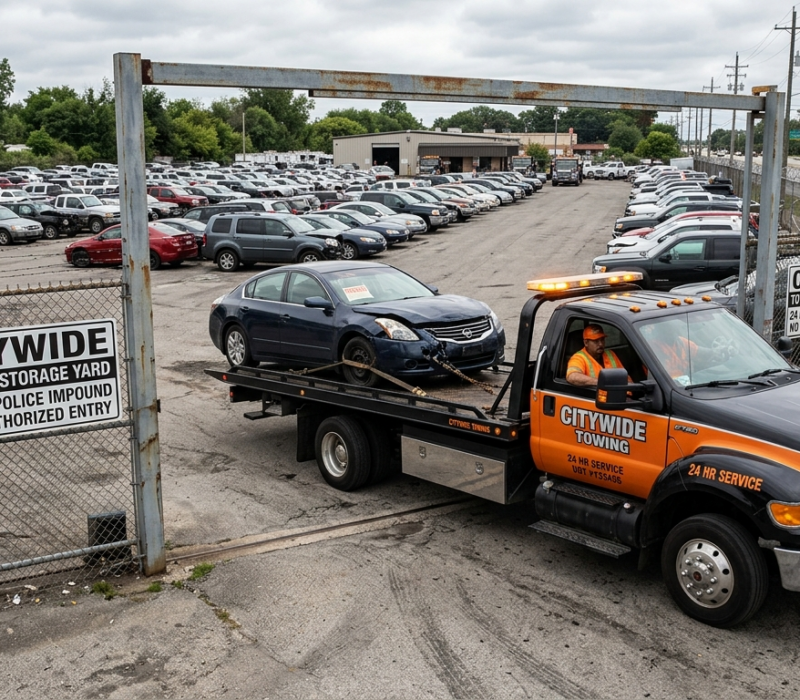
  • Increase recovery confidence. Real-time location data minimizes delays and simplifies repossessions, reducing the time and cost of recovery.
  • Grant more approvals safely. Reliable GPS verification supports compliance and lending oversight by providing traceable asset data that protects both lender and borrower.
  • Sell higher-value vehicles responsibly. Service reliability boosts your ability to sell high-value vehicles, allowing you to take calculated risks on premium inventory.
  • Stabilize cash flow. Faster recoveries and improved collections reduce volatility and improve working capital consistency.
  • Reduce administrative burden. Accurate reporting and easy monitoring save valuable staff hours.
  • Enhance customer satisfaction. Reliable systems lead to smoother transactions and fewer disputes.

When GPS tracking becomes part of your operating strategy, not just a security add-on, it creates measurable financial upside. Reliable visibility, transparent pricing, and experienced support let independents grow confidently, lend smarter, and safeguard every deal.

 â€œVisibility is the foundation of control — and control is the foundation of growth.”

Evolving Technology, Enduring Dependability

GPS technology has evolved — but the mission hasn’t.
Dependability still defines value.

Today’s systems blend advanced connectivity and low-power performance to deliver reliability that keeps pace with dealer operations.

Modern tracking solutions deliver:

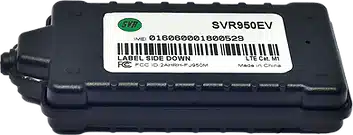
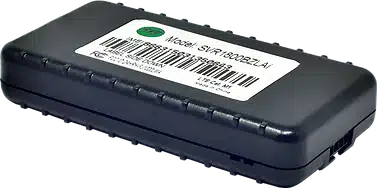
  • 4G/LTE connectivity with coast-to-coast reliability.
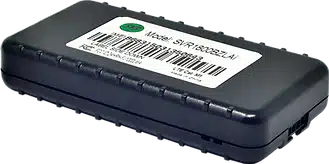
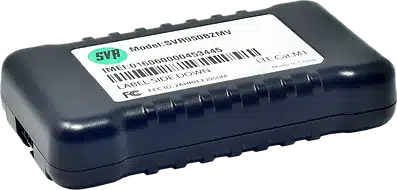
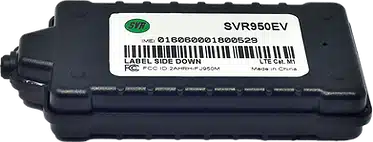
  • Battery-powered flexibility for fast deployment and vehicle turnover.
  • Deferred activation so billing starts only when the unit is installed and live.

Hardware alone doesn’t create reliability — partnership does. Independent dealers need responsiveness, not ticket systems. When vehicles move, time matters. Dependable technology backed by a partner who answers directly ensures problems are solved before they become losses.

Wired vs. Battery — Choosing Based on Strategy

FactorWired TrackersBattery-Powered Trackers
Best ForLong-term loans, leases, Starter DisableShort-term loans, rentals, high-turn inventory
InstallationRequires professional wiringQuick self-installation in minutes
FlexibilityFixed placementPortable between vehicles
Customer ExperiencePossible risk if installed incorrectlyNo vehicle impact
Deployment Speed30 minutes per unit5 minutes or less

Many high-performing independents use a mixed approach — wired for long-term assets and battery-powered for turnover. The best choice isn’t about the device type, but about the partner that ensures both work seamlessly, reliably, and at scale.

Five Qualities That Define a True GPS Partner

Visuals & Layout

Every provider promises reliability. Only a few prove it. These five qualities define a genuine GPS partner:

  1. Industry Understanding
    The independent and BHPH model is unique. Choose a provider built for it, not one repurposing fleet solutions.
  2. Proven Reliability
    Look for multi-year warranties, field-tested devices, and recovery guarantees. Dependability is proven in the field, not in a brochure.
  3. Personal Support
    When recoveries can’t wait, customer service can’t be scripted. U.S.-based teams that answer directly and act immediately make the difference when timing matters most.
  4. Transparent Pricing
    No hidden renewals. No activation until installation. No minimum commitments. Predictability is protection.
  5. Scalability and Consistency
    Autoship and locked pricing programs show maturity — helping you scale with confidence and continuity.

Dealers trust partners who answer directly and act immediately, not chatbots or ticket queues.

Making an Informed Decision + The Experienced Difference

Making an Informed Decision
Before choosing a tracking provider, evaluate the factors that truly determine dependability:

  • Is the technology field-tested for independent operations?
  • Do they offer responsive, U.S.-based support?
  • Are warranties aligned with your success, not their margins?
  • Can you control activation and scale at your pace?
  • Will they pick up the phone when recovery matters most?

Choosing a partner isn’t about the lowest quote — it’s about confidence that every device and every call will deliver value when you need it most.

The Experienced Difference
Experience isn’t measured in years — it’s measured in uptime, recoveries, and responsiveness.
Generic providers often enter the market with aggressive pricing but little industry context. Independent dealers need expertise that translates into trust.

 â€œIn a business built on risk, experience is your strongest form of insurance.”

Partnering With the Proven Leader — SVR Tracking

For over 20 years, SVR Tracking has been the trusted GPS partner for independent dealers and finance companies nationwide, protecting more than one million vehicles.

SVR’s program reflects everything outlined in this guide — reliability, transparency, and partnership:
â€Ē No activation until installed
â€Ē Low-price guarantee with no monthly minimums
â€Ē 30-day risk-free trial
â€Ē 3-year warranty and recovery guarantee
â€Ē U.S.-based support
â€Ē Autoship programs and locked pricing for consistency

SVR Tracking was built for independents — dealers who depend on responsiveness, reliability, and relationships that last. Its technology empowers confident lending and its service ensures peace of mind.

Learn more at svrtracking.com/39reasons

Navigation concept

GPS: A Closer Look into the Hallmark Technology of Telematics

In 2022, GPS is all around us – maybe even more so than some people are comfortable with. Short for “Global Positioning System,” GPS is the hallmark technology used for locating and tracking people and things, and for that reason, surrounds our everyday lives.

We can not only access detailed route guidance from San Diego to San Francisco, but we can also search for generic term like “food” and see only relevant, nearby restaurants recommended to us. Even mobile applications can utilize GPS to offer us a streamlined experience.

But how exactly does GPS work? And what does the technology really do? Without any knowledge on the subject one might assume that it utilizes the Internet to find its location. I know I did at first. I mean, every innovation nowadays comes from the Internet, right?

Let’s consider the GPS navigation systems in our car sand on our phones. Cars – at least for the moment – generally do not connect to the Internet. However, in-car GPS systems have existed for over 20 years. And in phones/mobile devices, our Maps route does not crash or quit once we enter an area with no service. By those two examples alone, we can see that “Internet” does not hold up as the answer to our question. In a practical sense too, if GPS relied on the Internet to function, it would be a huge limitation to the technology. Imagine being in a remote location and losing your route because of weak connection or having your route buffer right before a turn in a busy city. The limitations could be dangerous.

But if not thanks to the Internet, then how does GPS work?

GPS Overview

At its core, GPS is a system that includes 31 satellites that orbit the Earth and send out information that devices receive and use to determine their (the device’s) location. There are 31 satellites to ensure that GPS devices can be anywhere on Earth and still pick up signals from at least 4 satellites (more on this below). This process breaks down into five major steps:

  1. Satellites send a signal via radio wave that includes location and time data
  2. Radio signal travels from space to Earth for devices to receive
  3. GPS device (smartphone, tracking unit, etc.) receives signal and notes the exact time the signal was received
  4. GPS device calculates distance from the satellite
  5. GPS device repeats steps 1-4 for four satellites, and uses geometry to find device location
       

GPS: A Closer Look

Let’s take a closer look at each step to better understand this process.


Step 1: Satellites send out a radio wave signal

Starting at step 1, each of the 31 satellites is constantly sending out a unique, repeating code in the form of radio signals. These signals are sent out regardless of any action on the receiving end. In other words, GPS devices do not request data from a satellite; satellites send out signals and GPS devices receive when needed. So, if all GPS devices were shut down, these satellites would still be transmitting the signal, they would just not be received by anything. This allows for maximum coverage from the GPS system because it does not rely on the device being able to reach the satellite. If every GPS device had to communicate with each of the 31 satellites, these satellites would be overloaded, and the system would either crash or be extremely slow. Instead, satellites send out their signals into open space and devices that pick up the signal determine whether or not they need the information. This is just like our FM & AM radio stations. Each radio station will send out its signal regardless of who is listening, and it will be up to us to “tune in” to that signal and receive the data. But even if we do not tune in, that signal is still being sent out.

Looking at the image below, we can see that a satellite can send its data to many different GPS devices at once, because it sends out one wave into the open space, and GPS devices choose whether or not to receive the signal.


Step 2: Radio Signal Travels from Space to Earth

As mentioned above, these radio signals are not directed towards any particular device. So, when the satellite sends out a radio wave, it travels to Earth and is picked up by whatever devices can find the signal and want to pick it up. The key thing to note in this step is the rate at which the signal travels. These radio waves travel at the speed of light (c), which is 3×10^8 meters per second.

Steps 3 & 4: GPS Device Receives Signal and Calculates Distance

In these steps, the device detects the satellite signal and then tracks the beginning and end of the regular sequence sent by the satellite. From there the receiver can determine how long the radio wave took to travel from the satellite to the receiver. Now, using this calculated time and the fixed speed of the signal, the speed of light, we can calculate the distance between the GPS device and the satellite using the following formula:

Distance = rate * time

Step 5: Use Distances from 4 Satellites to Find Location

While it seems like we solved our equation after step 4, we are still not quite there. Knowing the distance from our GPS device to the satellite is great information, but in the end the distance does not tell us our location. However, we can utilize distances from multiple satellites to calculate the device location.

If we have the distance from four different satellites, we can use geometry to figure out the location of the receiver. Each satellite creates a sphere with a radius of its respective distance, and then intersection of the four spheres will be where the GPS tracker is located.


The reason that four satellites are needed is because we are trying to find a unique intersection point in three dimensional space. You make think three dimensions means three satellites, but in actuality four satellites are needed to find a distinct, single intersection point. Let us consider the 2D space to see why this happens. Looking at the diagram below, you can see that with two circles, there are two points of intersection. However, bringing in a third circle will eliminate one of those points and narrow down to only one point of intersection.


Using that same logic, we can extend that line of thinking to the 3D space. Having only three satellites will lead to two intersecting results: one on the surface, and one approximately 12,500+ miles off of Earth’s surface. So, bringing in the fourth satellite will narrow the results down to the true location of the GPS device.

Conclusion

In reality, there are many more computations, factors, and nuances at play in the process of calculating location using GPS, but this description provides the foundation. Overall, GPS is incredibly accurate at telling time and location, and is utilized in many different ways across many different industries. GPS is a critical factor at play in telematics, and provides reliable, accurate data to fleet managers, no matter the surrounding conditions. And for fleets that traverse many thousands of miles through all sorts of terrains, this means safety and security for their drivers.